
The Cognitive Workout at The Corner Hotel
The bass thumps through your chest at The Corner Hotel. Simon’s guitar rips into the opening riff of “Livin’ on a Prayer.” Your phone buzzes—not a text, but a trivia question flashing on the Hollywood Groove app: “What year did Bon Jovi release this anthem?” Suddenly you’re not just another body in the crowd. You’re a participant. Your brain fires up, synapses dancing to a different beat while your feet stay planted in the sticky pub floor. That moment? That’s your mind getting the workout it desperately needs.
We’re drowning in passive entertainment. Scroll. Swipe. Stream. Our brains have become couch potatoes, binge-watching Netflix while our cognitive muscles atrophy. But trivia is good for your mind in ways that passive consumption could never match. When you wrack your brain for that elusive fact—the name of the drummer in Nirvana, the year “Macarena” dominated airwaves, which 80s one-hit wonder featured a keytar—you’re not just killing time between verses. You’re literally rewiring your neural pathways.
The science backs this up. Research from the National Institutes of Health confirms that trivia games improve cognitive skills including memory retention, mental flexibility, and problem-solving abilities. Your brain doesn’t know the difference between recalling who sang “Tainted Love” in 1981 and solving a calculus equation. It’s all neural gymnastics. Each correct answer strengthens your hippocampus, the region responsible for memory formation. Each near-miss—when you almost remember that Michael Smedley’s bass line references a 90s R&B classic—creates new connections that make your mind more agile for the next challenge.
Jules belts out the chorus while you frantically type “1986” into the app. Carlin’s drum fill cascades over the crowd’s roar. You’re multitasking on a level that would make your work Zoom meetings weep with envy. This isn’t just entertainment; it’s cognitive cross-training.
The magic happens because your interest is already peaked. You’re not studying for an exam; you’re competing for bragging rights over a pint of Melbourne Bitter. That emotional engagement matters more than you think. Studies show that interest in learning trivia answers directly enhances memory performance, especially over time. The dopamine hit you get when Mike Yanko’s synth line triggers the answer to a question about 80s new wave? That chemical reward reinforces the memory, making it stick longer than anything you mindlessly double-tapped on Instagram this week.
But here’s where Hollywood Groove’s format becomes genius. The band doesn’t just play at you—they create a three-dimensional experience where music and mental challenge collide. Justine May’s vocal runs on a Madonna track become clues. Michelle Morrison’s harmonies on a Destiny’s Child throwback trigger recognition. Your brain is processing auditory information, visual cues from the stage, social pressure from your trivia team, and tactile feedback from your phone screen. This multi-sensory assault is exactly what cognitive researchers mean when they talk about “mental flexibility.” You’re not just remembering facts; you’re learning how to learn faster.
And let’s talk about that social alchemy. Melbourne pub culture runs on conversation, but modern venues face a silent epidemic: groups of friends physically together while mentally isolated, each in their own digital bubble. Trivia shatters that isolation like a cymbal crash at the climax of “Don’t Stop Believin’.” Research from senior living communities (applicable to any social setting) shows trivia games foster conversation and connection between friends, neighbors, and even strangers at a venue. At a Hollywood Groove show, you see it happen in real-time. The table next to you—three blokes who arrived as separate entities—suddenly becomes a huddle of conspiracy, debating whether “Wannabe” hit stores in ’96 or ’97. The couple by the bar recruits the bartender into their team because he remembers the B-side of that INXS single.
The mobile app amplifies this beautifully. It creates individual accountability within collective experience. You’re not just shouting answers across the sticky floor; you’re contributing to a shared digital scoreboard while maintaining your personal stake. Simon Towers might be shredding a guitar solo, but your mind is racing through 90s one-hit wonders, and the stranger beside you becomes your temporary lifeline when you blank on the name of that third member of Hanson. This is community formation in real-time, built on the scaffolding of shared cultural memory.
Your Brain’s Workout
Melbourne’s live music scene has always been about more than just bands. It’s about the ritual, the regulars, the recognition that comes from showing up. Trivia taps into that same psychological goldmine. Research on repetition and curiosity shows that audiences who encounter similar trivia questions across multiple visits become increasingly engaged. That bloke who comes to every Hollywood Groove show at The Esplanade Hotel in St. Kilda? He’s not just here for Mike’s killer keyboard work on “Don’t You Want Me.” He’s building mental muscle memory, anticipating certain question types, feeling his expertise grow. He’s becoming a regular in the truest sense—someone whose relationship with the venue deepens through intellectual investment.
This matters for Melbourne nightlife because we’re competing with infinite digital options. Why leave the house when Spotify can algorithmically serve you perfect 80s hits? The answer lies in that cognitive-social cocktail. Your couch doesn’t care if you know who produced “Billie Jean.” Jules does. The crowd does. The stranger who high-fives you when you correctly identify the year “Wonderwall” conquered the world—that’s a moment algorithms can’t replicate.
The trivia questions themselves become shareable artifacts, little nuggets of cultural currency. When Hollywood Groove asks “Which 80s band featured a keytar player who later became a successful TV composer?” (it’s Jan Hammer from the Miami Vice soundtrack, by the way), that fact becomes a story you’ll tell tomorrow. It becomes a thread in the fabric of Melbourne’s music-obsessed culture. These aren’t just random facts; they’re connection points.
The research is clear: participation in games and puzzles is associated with better cognitive performance across multiple domains. In a Melbourne pub, that translates to sharper, more engaged audiences who return because they feel mentally alive in ways their screen-dominated weekdays don’t allow.
The synergy between music trivia and live performance creates a feedback loop that benefits both brain and band. When Carlin counts in “Eye of the Tiger,” your mind doesn’t just hear a drum beat—it accesses memories of Rocky montages, 80s workout videos, that time your dad played it in the car. Trivia questions about those associations strengthen those neural networks while the live performance provides the emotional anchor. You’re not just remembering; you’re feeling the memory. That emotional component is crucial. Cognitive research shows that emotionally charged experiences create stronger memory traces. The thump of Michael Smedley’s bass, the collective roar when the crowd sings the “don’t stop believin'” hook, the rush of getting a question right—all these sensations layer onto the factual information, creating a memory so vivid you’ll still be talking about it weeks later.
Community and Connection
Here’s a trivia-worthy fact for you: The human brain processes music in multiple regions simultaneously. When you identify a song from the first three notes during a Hollywood Groove set, your auditory cortex, memory centers, and emotional processing areas light up like St. Kilda Beach on New Year’s Eve. That lightning-quick recognition? That’s your brain’s trivia function in action, connecting dots across decades of stored information while your body responds with muscle memory from every wedding dance floor you’ve ever conquered.
The decades Hollywood Groove covers—80s, 90s, 2000s—are perfect for this cognitive workout because they represent shared cultural touchstones. Everyone has a frame of reference. The 80s gave us MTV and synthesizers. The 90s delivered grunge and girl power. The 2000s brought us the digital music revolution. These aren’t just eras; they’re mental filing systems we all possess. When trivia questions tap into that shared archive, they activate what psychologists call “collective memory”—the phenomenon where groups of people remember events and cultural moments together, reinforcing each other’s recall.
Think about it: You’re at a Hollywood Groove show at The Workers Club in Fitzroy. The question pops up: “What was the best-selling single of the 90s?” Debate erupts. Someone swears it’s “Candle in the Wind.” Another argues for “I Will Always Love You.” The actual answer—Elton John’s Princess Diana tribute, which sold 33 million copies—becomes a moment of collective discovery. The band launches into “I’m Still Standing” and suddenly that trivia answer is attached to a live performance, cementing it in your memory through multiple sensory channels. You’ve learned something, bonded with strangers, and exercised your brain’s retrieval systems. Try getting that from another night of Netflix.
The beauty of trivia in a live music setting is that it mirrors the way our brains naturally want to work. We’re pattern-seeking machines. We crave connection. We love solving puzzles. When you hear Simon’s guitar tone and instantly recognize it’s “Sweet Child O’ Mine,” your brain has just completed a complex audio-trivia challenge. The app questions simply formalize what your mind is already doing—connecting sounds to memories, faces to names, riffs to emotions.
The Engagement Factor
This cognitive engagement creates loyalty that transcends typical entertainment consumption. Research on game-based learning environments shows that participants develop what researchers call “sustained engagement”—they return not just for the primary entertainment (the music) but for the mental challenge itself. Hollywood Groove fans become venue regulars because their brains have literally been trained to anticipate the reward structure: great music plus mental stimulation equals a better night out than passive alternatives.
And for Melbourne’s competitive pub culture, this is perfect. We’re a city that loves its sports, its footy tipping, its pub debates about who was the better frontman: Mercury or Plant. Trivia channels that competitive instinct into something constructive. When you lose a trivia round because you couldn’t remember that “Mickey” by Toni Basil was actually a cover of a 60s song called “Kitty,” you don’t just shrug. You file it away. You become determined. You come back next week ready to dominate the 80s category. That determination? That’s neuroplasticity in action. Your brain is literally growing new connections, strengthening pathways, becoming more resilient.
The physical environment matters too. The thump of the bass, the warmth of the crowd, the taste of a cold beer—these sensory anchors help cement the trivia answers in your memory. Cognitive science calls this “context-dependent memory.” You’ll remember that fact about 90s grunge better because you learned it while Carlin’s drum kit exploded into “Smells Like Teen Spirit” and the room smelled of spilled lager and excitement. Try recreating that in your living room.
Mobile technology, often blamed for our collective attention deficit, becomes the delivery mechanism for deeper engagement. The Hollywood Groove app doesn’t distract from the live experience; it enhances it. It gives you a private moment of triumph when you nail a question, then amplifies that triumph by showing you how you stack up against the room. That public-private hybrid mirrors how we actually socialize—we want individual recognition within a community context. The app delivers that while the band delivers the soundtrack to your victory lap.
The Fight for Relevance
Consider this: Melbourne’s live music venues have been fighting for relevance in the streaming age. But streaming can’t replicate the cognitive-social cocktail of a great trivia night with live music. Spotify can’t watch you struggle to remember the third member of Destiny’s Child (it’s LaTavia Roberson, and Michelle Morrison will absolutely make you work for that answer during a performance of “Say My Name”). The algorithm doesn’t high-five you when you finally get it. Justine might, though, if you’re singing loud enough.
The repetition factor becomes crucial for venue sustainability. That UCLA research on curiosity and repetition suggests that regular attendees become more engaged with familiar question formats over time. This flies in the face of conventional entertainment wisdom that demands constant novelty. In reality, our brains love patterns. We love mastering frameworks. The first time you encounter a “Name That 90s Rapper” round, it’s chaos. The third time, you’re strategizing. By the fifth Hollywood Groove show, you’re recruiting friends based on their niche knowledge of one-hit wonders. You’ve become an evangelist not just for the band, but for the cognitive workout they provide.
This creates a sustainable entertainment model where audiences grow with the experience rather than consuming it and moving on. The band becomes part of your mental fitness routine. You don’t just want to hear Simon nail the solo from “Don’t Stop Me Now” (though you absolutely do). You want to test whether you can identify the year it charted before the app timer runs out. You want to prove to yourself that your brain still works, that your memory isn’t completely shot from too much screen time, that you can still learn and connect and compete.
And let’s be honest: In a world where we’re all quietly terrified of cognitive decline, where “brain fog” has become a universal complaint, trivia is low-stakes resistance training for your neurons. That moment when you correctly identify a synth line as a Depeche Mode sample isn’t just a point on a scoreboard. It’s proof that your mental machinery still turns. It’s a tiny victory against the entropy of aging, delivered with a side of Mike Yanko’s keyboard wizardry and a room full of people who get it.
The Tradition Evolves
The pub quiz tradition runs deep in Melbourne’s cultural DNA. We’ve always loved proving we know more useless facts than the next table. Hollywood Groove simply evolves that tradition for the smartphone era, wrapping it in the visceral thrill of live performance. The result is something greater than the sum of its parts: a night that exercises your mind, strengthens your social bonds, and leaves you humming “Dancing Queen” for three days straight.
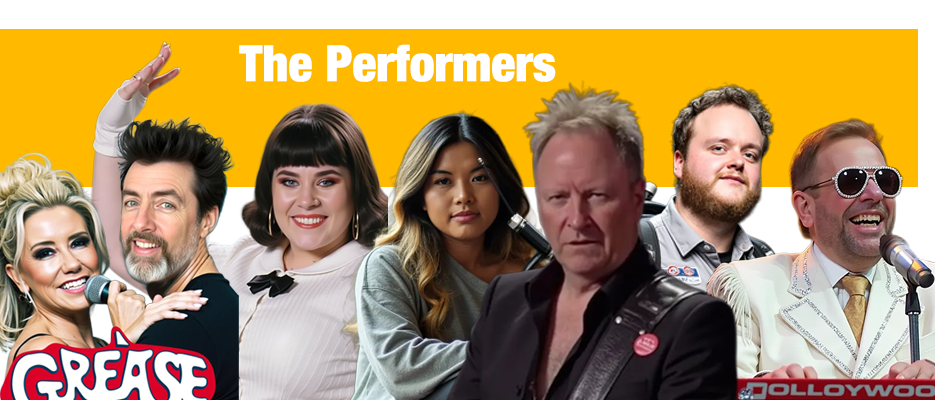
Your brain will thank you. Your friends will thank you. And Jules, Carlin, Mike, Justine, Simon, Michelle, and Michael will definitely thank you when you’re screaming the answers to their trivia questions as loudly as you scream the lyrics to “Sweet Caroline.” Because here’s the secret: the band is quizzing themselves every night too. Which crowd will sing loudest? Who knows their 80s deep cuts? Which Melbourne suburb brings the toughest trivia competitors? They’re reading the room, adjusting their set, making split-second decisions. They’re doing live trivia on a massive scale, and you’re both the audience and the answer key.
The Call to Action
So next time you’re debating between another night of algorithmic entertainment and getting off the couch, remember what your brain actually craves: the thump of live bass, the pressure of a ticking clock, the triumph of a correct answer, and the glorious chaos of a room full of Melburnians all trying to remember what year “Macarena” conquered the world (1996, and you’re welcome). Hollywood Groove is waiting. Your mind is ready. The trivia is calling.
And that, ultimately, is what makes live music with trivia so powerful. It’s not just that trivia is good for your mind. It’s that your mind is good for trivia. Your memories, your associations, your weirdly specific knowledge of 90s music videos—all of it becomes valuable. You become valuable. Not as a passive consumer, but as an active participant in a shared cognitive and cultural experience that you can’t get anywhere else in Melbourne.
The show starts at 9. Your brain workout begins the moment you walk in.